On June 8, 1944, the Chinese 71st Army broke through the Japanese defenses around Longling, the largest city along the Burma Road on the west side of the Salween River. Marshal Wei Lihuang recognized an opportunity when the Japanese shifted most of their forces north to oppose the XXth Army Group in the Gaoligong Mountains. He poured reinforcements across the Salween south of the road. Major General Song Xilian, commander of the XIth Army Group, personally led the attack that broke through Longling’s outer defenses and captured three-quarters of the city on the eighth. Unfortunately, though Song was personally brave, he was a terrible military leader. A Japanese relief column fought its way back into the city on June 16. With only 1,500 troops, they pushed over ten thousand Chinese from Longling. Only the emergency intervention of two squadrons of 14th Air Force B-25s kept it from becoming a total rout. The reverse marked a dramatic loss of momentum for the campaign. Marshal Wei could not replace Song for political reasons, nor could he convince him to make another attempt on the city. The Chinese settled down to a lengthy siege.
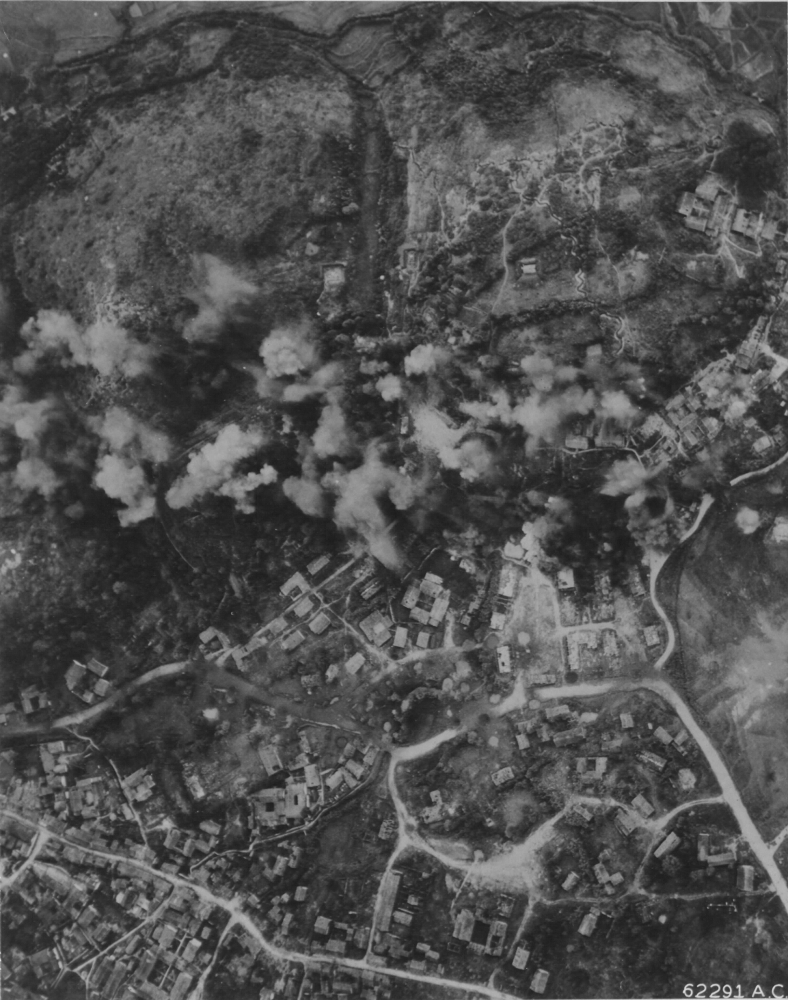
An aerial view of Longling during an American bombing raid.