The British commando leader Orde Wingate asked for light aircraft to evacuate his wounded from the jungles of Burma. By the time Philip Cochran arrived in November 1943, however, the light aircraft operation had expanded into a full-blown air task force, later designated the 1st Air Commando Group. In addition to four squadrons of small liaison planes, Cochran and Alison brought two fighter squadrons, a medium bomber squadron, and a troop carrier squadron, which included both C-47 transport aircraft and CG-4 gliders. The gliders were a great innovation. Instead of Wingate’s troops pushing deep behind enemy lines on foot, Cochran and Alison proposed to insert them by air. The gliders could land in jungle clearings, disgorge troops and equipment, and then be “snatched” out again by low-flying transports specially equipped with a hook and reel assembly.
Wingate planned his second Chindit expedition to begin in March 1944, though the Air Commandos arrived in advance to train with the ground troops. Air support for the operation was much more complicated than it had been coordinating supply drops for the first Chindit campaign. In North Africa and Europe, fighters and medium bombers struck targets behind a “bomb line” that kept them clear of friendly ground troops. In commando jungle warfare, however, there were no front lines, and so bomb lines were not particularly useful. In addition, it was difficult to move and employ artillery in the mountainous jungles, so air support was even more crucial. Instead of using large numbers of aircraft against area targets, the Air Commandos planned to use a small number of aircraft against pinpoint targets. The RAF controllers imbedded with the columns provided the necessary coordination via radio, or with panels or smoke bombs. Using rockets, low-level bombing, and dive-bombing, fighter-bombers would hit Japanese troops and positions only yards from friendly forces. The light aircraft not only evacuated casualties, but also flew a myriad of other missions, including courier, artillery adjustment, and tactical reconnaissance. Courier missions involved flying up to two hundred pounds of supplies to small jungle clearings, including 75-millimeter ammunition, PX rations, food, clothing, and medical supplies. Reconnaissance involved photographing Japanese positions, flying observers over the battlefield, determining the serviceability of roads and trails, and searching for potential locations for new airstrips. Flying low and slow over the battlefield made it easier to spot targets hidden in difficult terrain or concealed by camouflage. This was useful not only for artillery spotting, but also for directing air strikes. Liaison pilots often directed fighter-bombers in attacks on enemy positions. The L-5 had an HF radio with which it could communicate with other aircraft and the pilot or observer could also carry smoke grenades with which to mark a target. The result of Cochran and Alison’s revolutionary tactics was a symbiosis of air and ground that had never before existed.
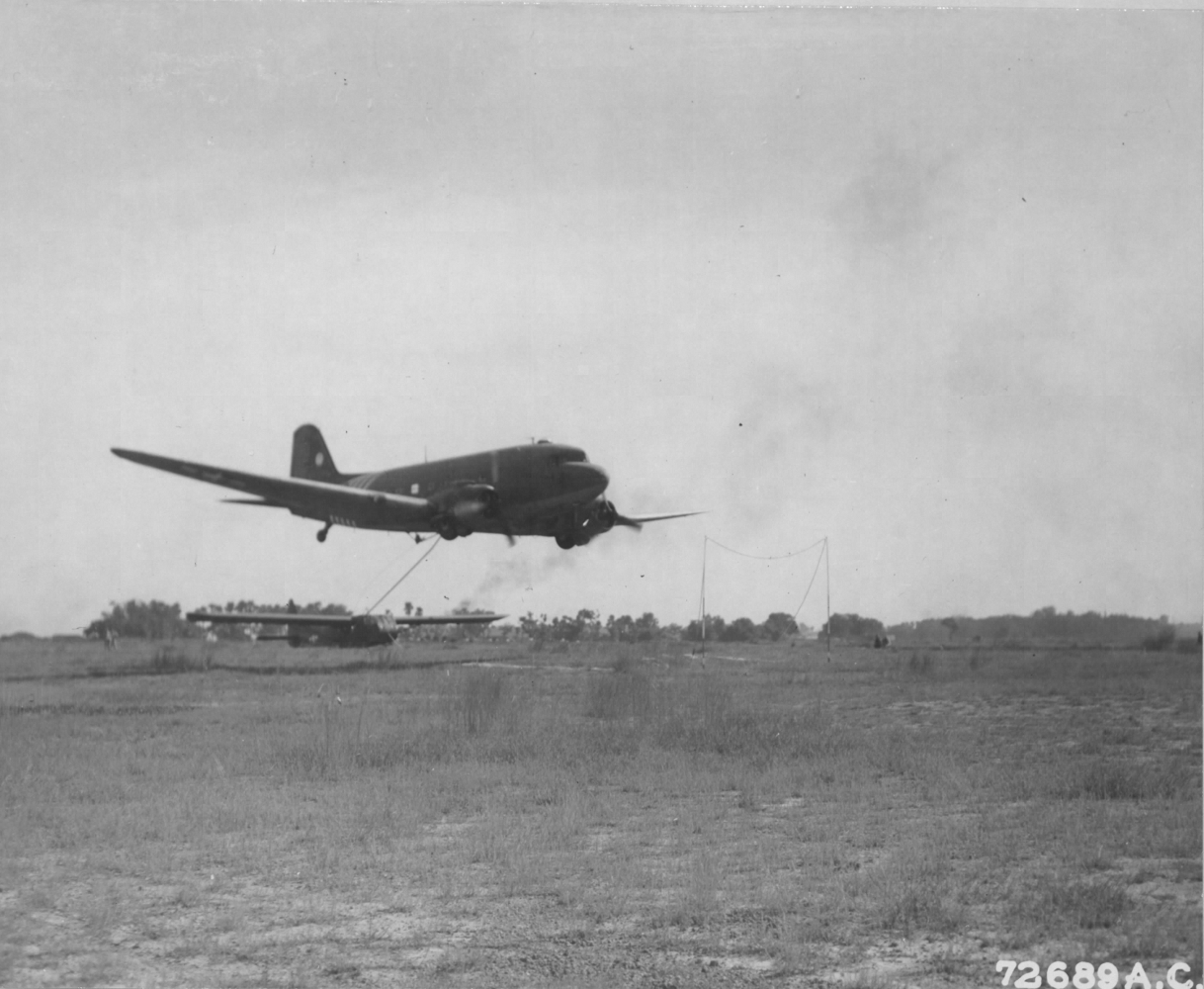
A C-47 from the 1st Air Commando Group uses its hook and reel assembly to “snatch” a glider from a jungle landing strip in Burma