On April 14, 1944, Chiang Kai-shek finally approved the Salween Campaign. It had been almost two years since the Chinese Army and the Flying Tigers had stopped the Japanese 56th Division as it drove along the Burma Road to the west bank of the Salween River. Lieutenant General Joseph W. Stilwell had been fighting his way into Burma from India since October 1943 and had been pressuring Chiang to do the same from China. Chiang had several reasons for refraining. First and foremost, the Japanese were about to begin their greatest offensive in China – one that would bring Chiang and his Nationalist government within a hairsbreadth of defeat. Second, though the Chinese Expeditionary Force (CEF) outnumbered the Japanese 56th Division, they were still undermanned, underequipped, and undertrained. Chiang did not think they could win unless their campaign coincided with an Anglo-American amphibious attack on Rangoon. Britain and America had promised such an attack many times, but always cancelled it in favor of higher priorities in other theaters. There was also an anti-government uprising in Xinjiang to think about, as well as expanding Communist influence. What finally tipped the balance in Stilwell’s favor and forced Chiang to commit? Stilwell got President Roosevelt to threaten to cut off lend-lease aid to the CEF if Chiang did not order it into combat. Even worse, he threatened to turn that aid over to the Communists, or other political rivals of Chiang who could get the job done. It brought about the desired effect; Chiang relented, but it also created a rift in his relationship with the Americans that would never be repaired.
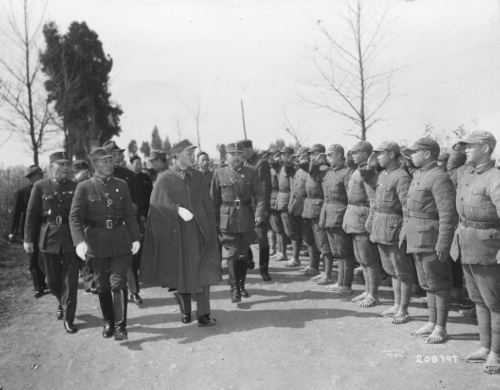
Chiang Kai-shek reviews troops of the Chinese Youth Army. Marshal Wei Lihuang, leader of the Chinese Expeditionary Force, is on Chiang’s left.